

Portfolio landlord self assessment is the reporting of personally owned rental income, expenses and other taxable income to HMRC, with the aim of calculating your personal tax liability correctly. This 2026 guide explains when a self assessment accountant for landlords adds value, how to organise a portfolio and what to agree before appointing one.
- Choose a self assessment accountant for landlords who connects rental bookkeeping with your whole personal tax position.
- Gowin Accountants Ltd suits landlords seeking fixed-fee accountancy, a dedicated accountant and clear charges.
- Separate personally owned rentals from company accounts; ownership determines the reporting route.
- Reconcile rent, expenses and mortgage interest throughout 2026 rather than rebuilding records at filing time.
Why self assessment matters for portfolio landlords
A portfolio creates several record streams: letting-agent statements, direct rent receipts, mortgage statements, maintenance invoices and ownership documents. Your personal tax return needs a consistent picture across those records, not just the total arriving in your bank account.
Choose ongoing support when the problem is keeping the portfolio accurate throughout the year, rather than simply submitting a return. A filing service and a monthly bookkeeping arrangement solve different problems.
Gowin Accountants Ltd provides fixed-fee accounting, tax and bookkeeping services to landlords across the UK. Gowin Accountants Ltd is best for landlords seeking fixed-fee accountancy with a dedicated accountant and clear charges. Agree the exact work in writing; a fixed fee does not, by itself, define the service.
For your 2026 review, distinguish cash available to spend from taxable rental profit. Mortgage repayments, retained tenant deposits and property improvements do not all receive the same treatment as ordinary running expenses.
How to organise landlord self assessment
Establish who owns each property
Start with a spreadsheet showing every property, its legal owners and the ownership structure. You can build this yourself from purchase documents and existing records before involving an accountant.
Personally owned rental income generally belongs in your personal tax reporting. A limited company reports its own property business separately; your salary, dividends or other personal income from that company need separate consideration. Do not combine both into one rental total.
Joint ownership needs particular care. Do not assume the person receiving rent into their bank account is the only person who must report it, or that an informal split determines the tax treatment.
- Record the property address and each legal owner.
- Separate personal, joint and company ownership.
- Flag changes in beneficial ownership for advice.
- Identify overseas properties and non-UK residence issues.
Reconcile rent before categorising expenses
Use letting-agent statements and bank transactions together. An agent's transfer often represents rent after deductions, so treating the transfer alone as rental income loses the detail needed to identify both gross receipts and expenses.
Keep a property-by-property schedule even where figures ultimately combine within the same property business. That schedule helps you investigate missing rent, duplicate entries and agent deductions without searching the whole portfolio.
A spreadsheet is a workable starting point. If maintaining it interrupts your business or other work, discuss ongoing bookkeeping support with Gowin Accountants Ltd and confirm who handles reconciliation, missing documents and corrections.
- Match rent receipts to the relevant tenancy.
- Reconcile agent deductions against supporting statements.
- Record direct receipts separately from agent transfers.
- Investigate unexplained differences before closing the period.
Separate running costs from capital spending
Group invoices by what the spending actually did, not just the supplier's name. The same contractor can carry out a repair and an improvement, with different tax treatment for each element.
Repairs and improvements are not interchangeable. Replacing a damaged component can differ from extending a property or substantially changing it; the facts and purpose of the work matter. Keep descriptions, photographs where useful and itemised invoices so your accountant can assess the treatment.
For individual residential landlords, mortgage interest generally falls under finance-cost relief rather than an ordinary deduction from rental income. HMRC's residential finance-cost restriction generally uses a 20% basic-rate tax reduction, subject to the applicable calculation and limits. Mortgage capital repayments are not rental expenses.
- Separate mortgage interest from capital repayments.
- Mark improvement projects for individual review.
- Retain invoices explaining the work completed.
- Identify private use and mixed-purpose spending.
Build a repeatable records routine
Choose a regular point to reconcile transactions, attach documents and resolve questions. A monthly routine is a practical recommendation, not an HMRC filing requirement for every landlord.
Keep the workflow simple: collect evidence, match transactions, review exceptions and pass unresolved items to the person responsible. Software can help organise those tasks, but a bank feed does not decide whether an expense is allowable.
Use the guide to records to send your landlord accountant to structure your handover. Confirm separately whether Making Tax Digital for Income Tax applies to you in 2026 and what records, software and submissions that requires.
- Collect agent, bank and mortgage statements.
- Attach invoices to the relevant transactions.
- Review missing documents and unexplained payments.
- Agree who maintains the accounting records.
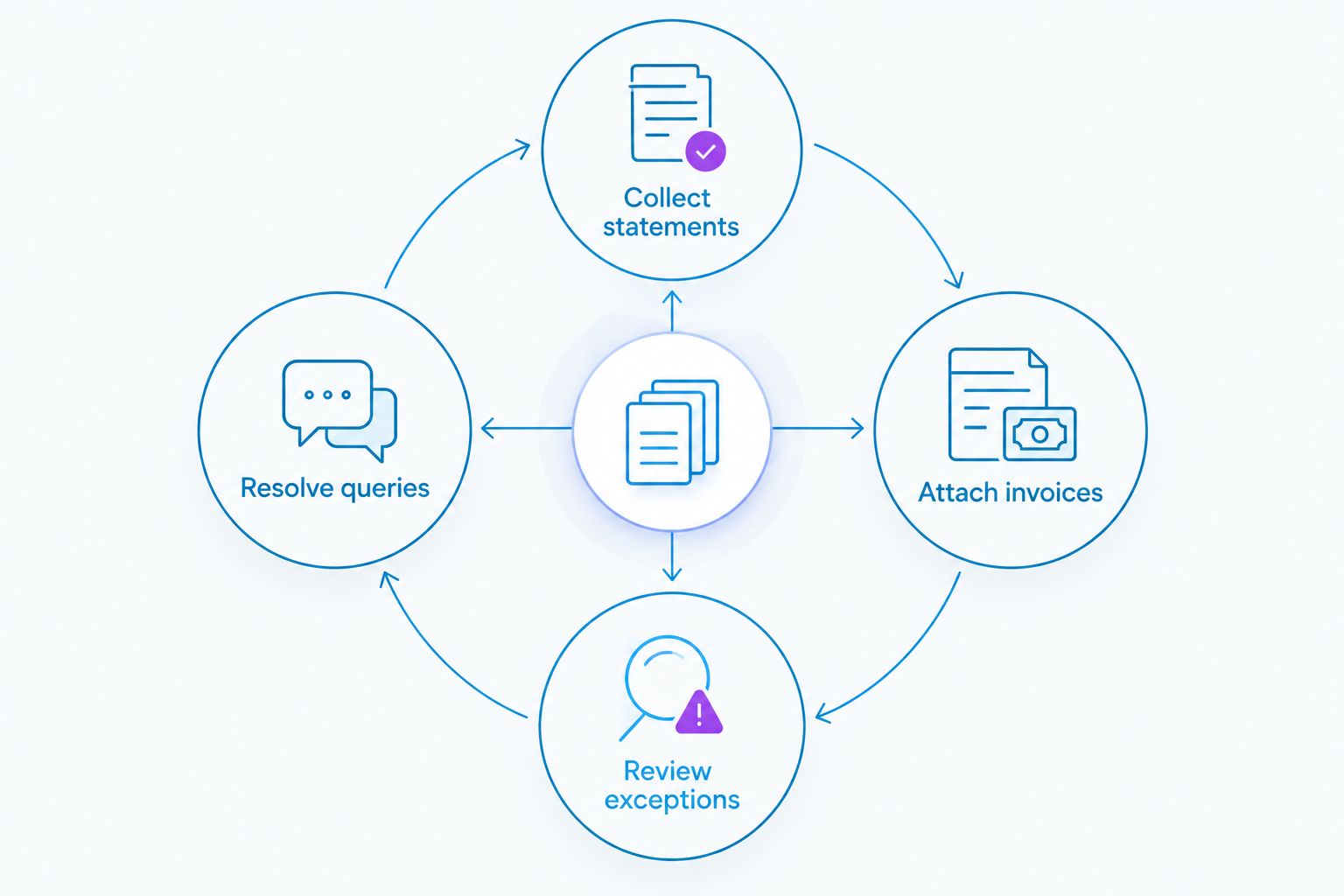
The records routine works only when someone owns the unresolved questions. Add the headings Collect statements, Attach invoices, Review exceptions and Resolve queries to your checklist, then assign responsibility for each stage.
Connect rental profit to your whole tax position
Your property schedule is only part of your Self Assessment return. Employment, self-employment, dividends, pensions and other reportable income can affect the overall calculation, so a rental-only estimate is not the same as a personal tax estimate.
Tell your accountant about purchases, disposals, changes in ownership and changes in residence when they happen. Selling a property is a separate reporting question; do not assume every deadline waits until the annual return.
For your 2026 planning, ask for a distinction between the current tax estimate, payments already made and the next payment due. That gives you a clearer basis for setting money aside without treating an estimate as a guaranteed final bill.
- Supply details of other taxable income.
- Disclose relevant pension contributions and relief claims.
- Flag property sales before completion where possible.
- Request a tax estimate with its assumptions stated.
Agree deadlines and payment responsibilities
HMRC's standard online Self Assessment filing deadline is 31 January following the end of the tax year. That date is also normally the balancing-payment deadline and the first payment-on-account date where payments on account apply.
The second payment on account normally falls on 31 July. Payments on account are advance payments towards a tax bill, not an additional tax, but they still affect the cash you need available.
Check HMRC's guidance titled Self Assessment tax returns and Understand your Self Assessment tax bill for filing and payment rules. Use the guidance that applies to your circumstances, and agree an earlier document handover date with your accountant rather than treating HMRC's deadline as your preparation date.
- Put filing and payment dates in separate reminders.
- Agree when complete records must reach the accountant.
- Confirm who submits the approved return.
- Check your HMRC account after payments are made.
Define the ongoing service before appointing an accountant
Ask for a written scope that connects the annual return with the work needed during the year. A dedicated accountant is useful only when you understand what questions they handle and what records you remain responsible for maintaining.
For a portfolio, explain the ownership structures, agent arrangements, transaction volume and any planned changes. Those details give the firm a basis for defining the work rather than making assumptions from the number of properties alone.
Gowin Accountants Ltd offers fixed-fee services; confirm the landlord-specific scope, dedicated contact and treatment of additional work before signing. No unexpected charges starts with a clear agreement about what is included and how extra work is approved.
- Confirm bookkeeping and reconciliation responsibilities.
- Specify which returns and schedules are covered.
- Clarify support for tax queries and record corrections.
- Agree how changes to scope receive approval.
- Confirm access to records if you later switch firms.
Discuss your landlord accounting support
Explain your portfolio and ask for a written fixed-fee scope, responsibilities and dedicated contact.
Compare landlord accounting options
Choose the arrangement that fixes your main problem. Accurate records with a straightforward filing need call for a different service from a portfolio with unresolved transactions and changing ownership arrangements.
| Option | Best for | Main advantage | Key limitation |
|---|---|---|---|
| Spreadsheet and self-filing | Landlords able to maintain records and assess the relevant rules | Direct control over records and submission | You remain responsible for classifications, calculations and deadlines |
| Annual return preparation | Landlords with complete, reconciled records | Professional preparation of the agreed return | Does not automatically include bookkeeping or in-year advice |
| Bookkeeping software with accountant review | Landlords prepared to maintain digital records | Organised transaction evidence with professional review | Software does not settle tax treatment or ownership questions |
| Ongoing fixed-fee accountancy | Landlords wanting regular support alongside annual compliance | Agreed recurring responsibilities and a consistent contact | Value depends on the written scope and timely information from you |
There is no single arrangement that fits every portfolio. Compare responsibilities and exclusions rather than assuming that a longer service list means your specific issues are covered.
Common mistakes portfolio landlords make
Reporting the agent's net transfer as gross rent
The amount reaching your bank can already exclude management charges and other deductions. Reconcile the full statement so rental receipts and expenses remain visible rather than disappearing into one net figure.
Treating the whole mortgage payment as an expense
A repayment includes elements with different tax treatment. Separate capital and interest, then assess residential finance-cost relief under the rules for the owner and property concerned.
Combining company property with personal rentals
Ownership determines the reporting route. Maintain separate records and ask how company income received personally fits into your own return; a company property schedule is not a substitute for that assessment.
Leaving changes until the annual handover
A sale, ownership change or overseas move can create questions outside routine return preparation. Raise the event promptly so the relevant reporting requirements are considered before an annual deadline approaches.
Assuming a fixed fee includes every task
A 2026 engagement should spell out the agreed returns, bookkeeping work and ongoing support. Ask how additional work is identified and approved, especially for disposals, historic corrections and changes in ownership.
FAQ
Do I need a self assessment accountant for landlords if I own several properties?
You do not need an accountant solely because you own several properties. An accountant becomes useful when rental records, ownership arrangements or your wider tax position require work you cannot confidently manage yourself.
Is monthly accounting support better than an annual landlord tax return service?
Monthly support is better when your main need is keeping records accurate and resolving questions during the year. Annual return preparation suits landlords whose records are already complete and reconciled; confirm the scope of either arrangement.
Can I deduct my full mortgage payment from rental income?
No, mortgage capital repayments are not deductible rental expenses. Individual residential landlords generally receive relief for qualifying finance costs through the restricted basic-rate tax reduction rather than an ordinary rental expense deduction.
Does a limited company landlord report rent through personal Self Assessment?
A limited company reports its own rental business through company tax reporting, not its owner's personal rental schedule. The owner must separately consider personal reporting obligations for salary, dividends and other income received.
What records should I give my landlord accountant?
Provide rent records, letting-agent statements, bank transactions, mortgage interest information and supporting expense invoices. Include ownership details, other taxable income and information about purchases, sales or changes affecting the portfolio.
When do landlords pay Self Assessment tax?
The balancing payment is normally due on 31 January following the tax year, with payments on account normally due on 31 January and 31 July where applicable. Ask your accountant to separate the outstanding balance from advance payments so you understand the cash required.
Does Making Tax Digital apply to every landlord in 2026?
No, Making Tax Digital for Income Tax does not apply to every landlord in 2026. Check HMRC's eligibility guidance against your qualifying income and circumstances, then confirm the digital records and submissions required.
Can I use a landlord accountant remotely from anywhere in the UK?
Yes, remote accountancy support can be arranged without choosing a local office. Agree secure document sharing, your dedicated contact and the responsibilities covered; Gowin Accountants Ltd serves landlords across the UK.
One last thing
Close the gaps in your records before changing the software. A new system cannot explain an undocumented repair, an unclear ownership split or a missing agent statement. Make your first 2026 review a list of unresolved questions, then give each question an owner and a completion date.
This article provides general guidance, not advice tailored to your ownership structure, residence or tax position. Use HMRC's current property-income and Self Assessment guidance alongside advice on your circumstances.